
Disclaimer: This article touches on a sensitive topic. If you are personally struggling with disordered eating, the National Alliance for Eating Disorders helpline is available to offer support and guidance.
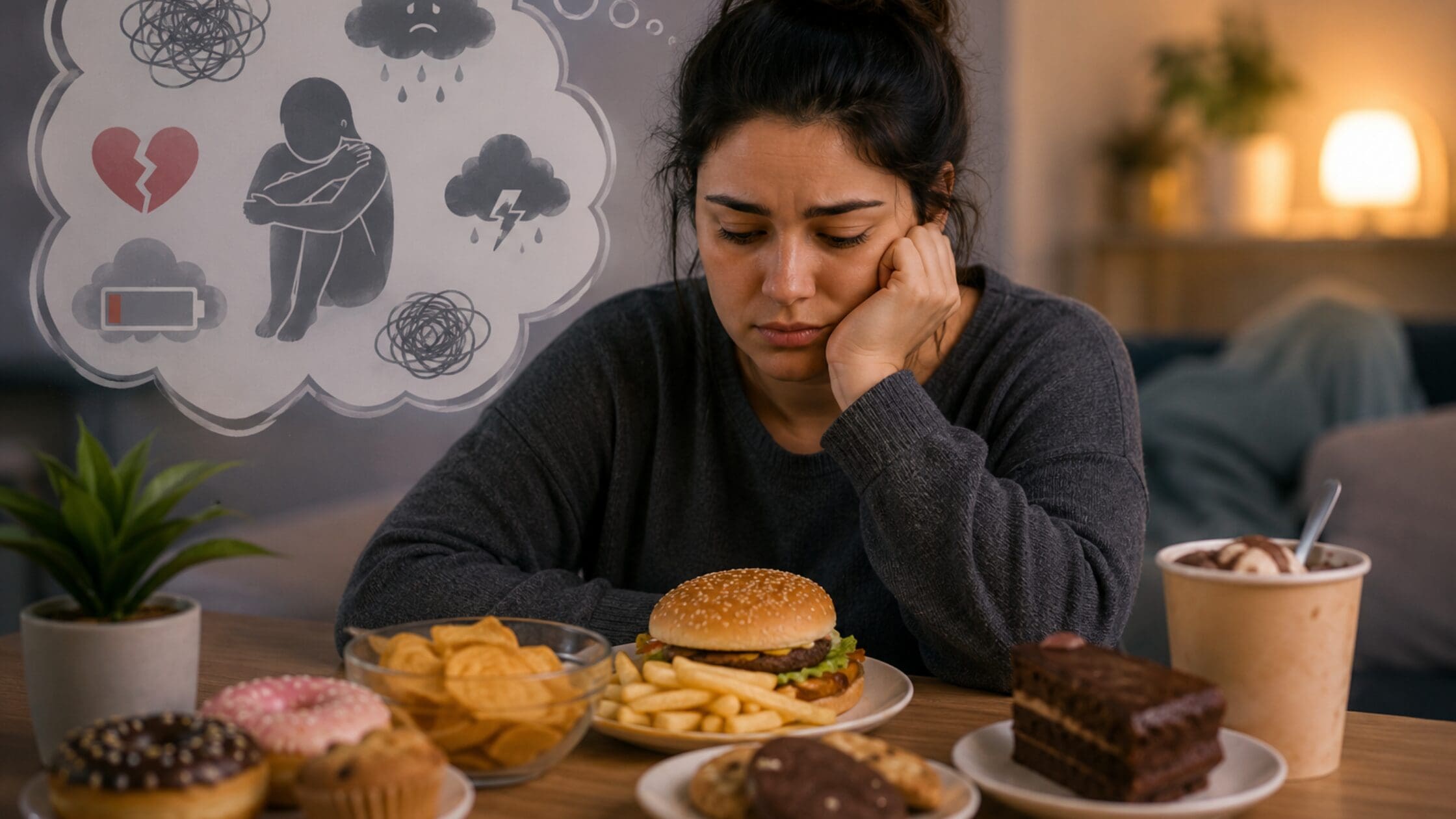
Food is often the first thing we reach for when emotions feel too big to sit with. For many people, eating becomes less about hunger and more about managing feelings that have nowhere else to go.
Here is a closer look at why this happens and what it might mean.
What Is Binge Eating?
Binge eating refers to a pattern where someone eats in a way that feels out of control, often beyond physical hunger, and is frequently followed by feelings of shame or distress. It is not about willpower or discipline. It is far more often connected to how someone is processing emotions than to food itself.
At Inner Voice Therapy, Saleha Javed works closely with clients to understand this connection in a way that feels safe and non-judgmental.
The Link Between Emotional Distress and Binge Eating
Food as a Source of Comfort
Food is one of the earliest sources of comfort we experience, often tied to care and safety from childhood. It makes sense that many people return to food during moments of emotional difficulty, even as adults.
Numbing Difficult Emotions
Eating can create a temporary sense of relief from emotions that feel overwhelming, such as sadness, anxiety, or loneliness. The act of eating itself can momentarily quiet difficult thoughts and feelings.
Filling an Emotional Void
For some, binge eating becomes a way to fill a sense of emptiness or disconnection that is difficult to name. This emotional gap often has little to do with food and much more to do with unmet emotional needs.
Responding to Stress and Overwhelm
When life feels unmanageable, eating can become one of the few things that feels within a person’s control, even if it does not feel that way in the moment. Stress and overwhelm are commonly reported triggers for binge eating episodes.
If stress feels like a constant companion in your life, our article on anxiety vs stress may help you understand what you are experiencing.
Why This Pattern Develops
Binge eating as a coping strategy rarely appears out of nowhere. It often develops gradually, sometimes beginning in childhood or adolescence, as a way of managing emotions that felt too difficult to express or were never given space at home.
This is a learned response, not a personal failing. Understanding it this way is often the first step toward changing the relationship with food and emotions.
For many people from immigrant or BIPOC backgrounds, emotional expression was not always encouraged growing up, which can make food one of the few accessible outlets. Our article on unmasking mental health in the BIPOC community explores this dynamic further.
Signs the Pattern May Be Affecting Your Wellbeing
It can be hard to know when an emotional eating pattern has become something worth addressing more directly. Some general signs worth paying attention to include:
- Eating in response to emotions far more often than physical hunger
- Feeling a loss of control during eating episodes
- Strong feelings of shame, guilt, or secrecy around eating
- Using food as the primary or only way of coping with difficult feelings
- Noticing that eating patterns are affecting your mood, energy, or daily life
Noticing these patterns is not something to judge yourself for. It is simply useful information.
Healthier Ways to Process Emotions
Building other ways to process difficult emotions takes time, and it is not about eliminating food as a source of comfort entirely. It is about having more than one tool available when things feel hard.
This might include talking to someone you trust, moving your body in a way that feels good, journaling, or simply naming what you are feeling out loud. There is no single right way to do this, and what works often looks different for everyone.
Professional support can make a significant difference in building these tools in a way that feels sustainable rather than restrictive.
How Therapy Can Help With Emotional Eating Patterns
Therapy offers a space to understand the emotional roots of binge eating without judgment, and to build a healthier relationship with both food and feelings over time.
At Inner Voice Therapy, Saleha Javed works with clients navigating emotional eating patterns, helping them understand what their relationship with food is communicating and developing more sustainable ways to cope.
Conclusion
Binge eating is rarely about food alone. It is often a sign that emotions have been carrying more weight than they were ever meant to carry on their own. If this resonates with you, reaching out for support is a meaningful and worthwhile step.
If you would like to talk to someone about this, Saleha Javed at Inner Voice Therapy is here to help.